What Makes a Mattress Vegan? A Look at Materials, Certifications, and Ethics
In the quiet mathematics of sleep, the mattress is both instrument and moral argument. veganmattress.org invites readers to peek behind the ticking, to ask not only what keeps us comfortable at night, but what keeps our choices humane during the day. This introductory guide dives into plant-based materials, the certifications that attempt to tame greenwashing, and the ethical threads that connect a good night’s rest to a світ of responsible production.
Why consider a vegan mattress?
The concept of a vegan mattress extends beyond the absence of animal-derived components. It is a commitment to cradle comfort with plant-based or non-animal materials, to transparent claim-making, and to a supply chain that refuses harm as a product feature. In practical terms, a vegan mattress might favor natural latex alternatives grown in a sustainable cycle, plant-based foams that eschew animal byproducts, and organic fibers that minimize chemical treatments. But it is not merely a catalog of materials; it is a larger conversation about how our sleep surfaces intersect with ethics, health, and planetary stewardship.
The decision to seek vegan options often aligns with a broader lifestyle: people who care deeply about animal welfare, biodiversity, and the long-tail consequences of manufacturing choices. The mattress, in this light, becomes a microcosm of how we live—constructed with intention, tested for safety, and evaluated for truth.
Key vegan-friendly materials to know
A vegan mattress recognizes a spectrum of materials, each with its own advantages and considerations. The vocabulary ranges from latex and foams to fibers and fills, often with a careful balance between comfort, durability, breathability, and environmental impact.
-
Natural latex alternatives: Some vegan mattresses employ plant-derived foams or latex produced without animal byproducts. The emphasis is on non-toxic processing, low volatile organic compounds (VOCs), and ongoing certification scrutiny.
-
Plant-based foams: Origins in responsibly sourced oils and polymers, engineered to mimic the supportive feel of traditional foams while avoiding animal-derived inputs.
-
Organic and natural fibers: Cotton, wool, and other fibers can be grown or produced under organic regimes. For vegan considerations, wool is generally avoided; instead, non-animal insulators and fills are favored.
-
Non-animal fillings: Some mattresses use coconut coir, jute, bamboo, or cellulose-based fibers, chosen for breathability, resilience, and reduced chemical load.
-
Support cores: The heart of a mattress—whether modern polyfoams, latex foams, or alternatives—must deliver consistent performance without animal-derived additives.
Certifications to trust—and red flags to beware
The modern bedding market in particular benefits from certifications that bring clarity to claims. Yet, not all seals are created equal, and some may be misapplied or misrepresented. A discerning consumer looks for the horizon of third-party validation—tried-and-true standards that constrain harmful processes and reveal truth in supply chains.
-
GOTS (Global Organic Textile Standard): A leading standard for organic textiles, with environmental and social criteria. For vegan applications, GOTS helps ensure that fibers like cotton are produced in organic ways, though it does not directly certify veganism per se. Look for products that explicitly connect GOTS to vegan claims.
-
OEKO-TEX: A family of certifications, including Standard 100 and Made in Green, designed to verify absence of harmful substances and ensure safer textile production. It focuses on human-ecological safety rather than animal-free claims alone.
-
CertiPUR-US: A commonly cited foam certification that addresses content, emissions, and endurance. When evaluating vegan options, consider how CertiPUR-US claims intersect with vegan material claims, and whether vegan alternatives are used in the foam layers.
-
Cruelty-free and vegan-specific certifications: Some brands pursue certifications that explicitly verify cruelty-free manufacturing or vegan materials. These seals aim to reassure consumers about supply-chain ethics beyond product safety.
Beyond formal seals, readers should prize full disclosure: material lists, processing methods, and the whereabouts of raw inputs. Red flags might include vague language like “eco-friendly” without specifics, or claims that rely on proprietary blends that are not verifiable. The most trustworthy messaging is transparent about what is vegan and how it is verified.
Ethical manufacturing and supply-chain transparency
Ethics in manufacturing is not a garnish; it is a prerequisite for credible vegan claims. The consumer should consider where a mattress’s core materials come from, who processes them, and how labor standards are upheld across the supply chain. Cruelty-free manufacturing, a clearer separation of animal-friendly claims from ethical labor practices, and traceability all contribute to a more trustworthy product narrative.
In practice, this might involve supplier audits, traceable sourcing of fibers, and third-party assessments of factory conditions. A truly vegan mattress signals that it has interrogated not just the product materials, but the entire ecosystem that makes the product possible.
The ethical dimension often intersects with environmental goals: reduced chemical load, minimized water use, and the potential for circular design—materials chosen with end-of-life management in mind. The sleeping surface, then, becomes a fragment of a larger conversation about sustainable consumption.
Three key voices across time
To illuminate the evolving discourse around vegan materials and ethical bedding, we turn to three individuals who, in distinct periods, studied the intersection of science, ethics, and everyday comfort.
1) Marie Curie (1867–1934) — A scientist whose exacting standards prefigure the modern insistence on evidence-based claims
Marie Curie’s relentless pursuit of empirical truth in radioactivity, conducted under the glare of public skepticism, offers a parable for today’s demand for transparent material science. Although not a bedding expert, her insistence on reproducible results and careful measurement echoes in the way vegan mattress advocates insist on material data, safety profiles, and certification-backed claims. Curie’s legacy teaches us that credibility rests on the clarity of data and the humility to revise when the evidence shifts.
2) Rachel Carson (1907–1964) — The voice for ecological responsibility that quietly reshaped consumer culture
Carson’s Silent Spring reframed how the public perceived chemicals and their reach into daily life. In the context of vegan bedding, her caution about environmental impact invites readers to look beyond immediate comfort to the longer arc of sustainability. The ethos she championed—critical thinking about the consequences of every choice—helps readers interrogate vague marketing claims and demand material transparency.
3) Contemporary material scientists and ethicists — Translating lab rigor into consumer clarity
Today’s researchers and ethicists translate the lab’s precision into accessible narratives: what certifications actually mean, how supply chains are traced, and what constitutes vegan and cruelty-free manufacturing in a global market. Their work helps ensure that a mattress marketed as vegan is more than a label; it is a verifiable, well-documented practice.
Product spotlight: York Mattress Pad as an example of vegan-friendly comfort
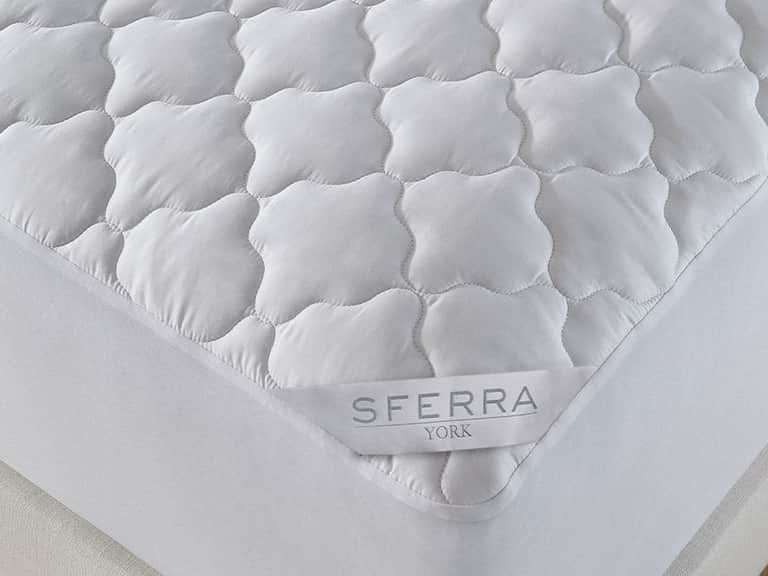
While a mattress itself may be the centerpiece of the sleep experience, accessories like mattress pads offer a gateway to vegan-friendly comfort without committing to a full product overhaul. The York Mattress Pad, a luxury down-alternative fill encased in 300TC cotton sateen, embodies a careful balance of loft, breathability, and care-friendly design. It demonstrates how a vegan approach can deliver premium feel through simple, transparent materials and straightforward laundering guidance.
Materially, York relies on a 100% cotton fill and a cotton sateen shell, free of animal-derived inputs, and designed for easy care. The product list describes careful laundering and loft stability, illustrating how even a single layer can communicate a vegan ethos through performance and honesty.
Images available in product listing (York Mattress Pad)
Product summary: York Mattress Pad — 100% cotton fill; 300TC cotton sateen; luxury down-alternative loft; machine wash cold; gentle cycle; tumble dry low. Manufacturer-backed care guidance is explicit about preserving loft and avoiding agitation that could clump the fill.
A resource path for readers
veganmattress.org aims to be a living archive: a space for readers to learn, verify, and reflect. The following structure can help organize content that remains informative, credible, and relevant.
- About veganmattress.org: Mission, credibility markers, editorial standards, and how we verify claims.
- Guides: What Makes a Mattress Vegan? Certifications to Trust; Common Vegan Materials in Bedding; Ethics and Transparency in Manufacturing.
- Materials: Deep dives into latex alternatives, plant-based foams, organic fibers, and non-animal fills.
- Verification: Checklists and questions to ask manufacturers; how to read diverse claims responsibly.
- Resources: Glossary of terms, list of certifications, and non-commercial references to external standards bodies.
- Blog/News: Regular updates on vegan materials, regulatory changes, and new certifications.
The strength of this approach lies in its ability to evolve: successive articles can remix core concepts with new data, case studies, and expert commentary, while maintaining a consistent, non-commercial stance.
Join the conversation
If you’re exploring vegan sleep options or wrestling with a particular label you’ve seen on a product page, share your questions and experiences. This article is a starting point, not a verdict. The aim is a well-lit, evidence-based conversation about what makes a mattress vegan—and what it takes to claim it honestly.